
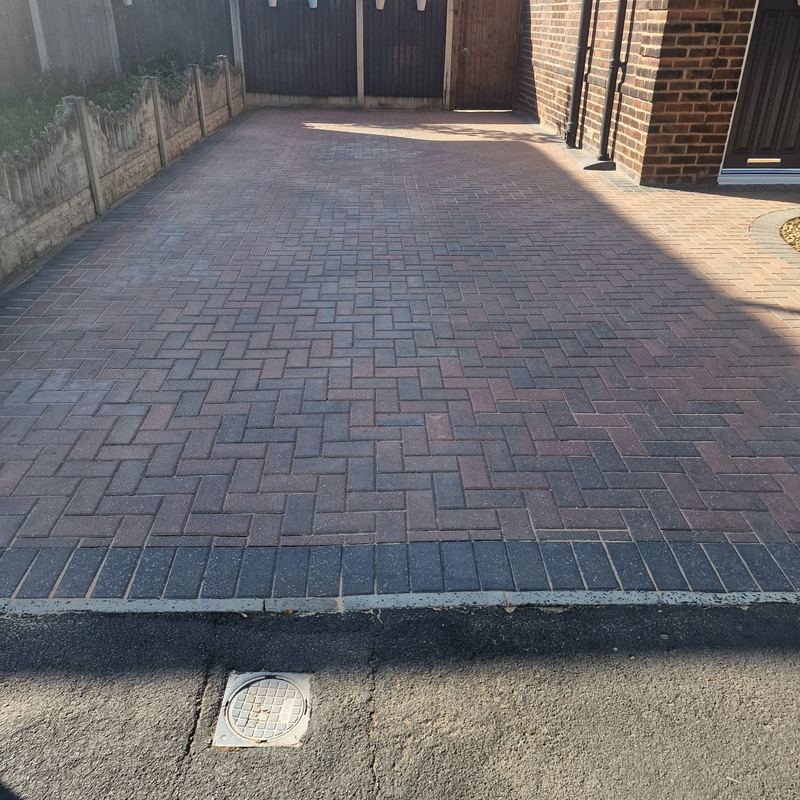
Why does block paving need re-sanding after pressure washing?
Pressure washing takes the old sand out of the joints along with the moss and weeds. Without fresh sand, blocks can shift and weeds come back faster.
- 5.0 on Google from 24 reviews
- Insured — £5 million public liability
- Prices from photos, usually same day
What the sand does
Block paving isn't glued down. The blocks sit on a sand bed and are held in place by sand packed tightly into the joints between them. That jointing sand stops the blocks rocking and spreads the load when you drive on them.
What washing does to it
Moss and weeds root into the joints. To get them out, cleaning has to clear the top of each joint, and the old sand comes out with them. After a deep clean the joints are partly empty.
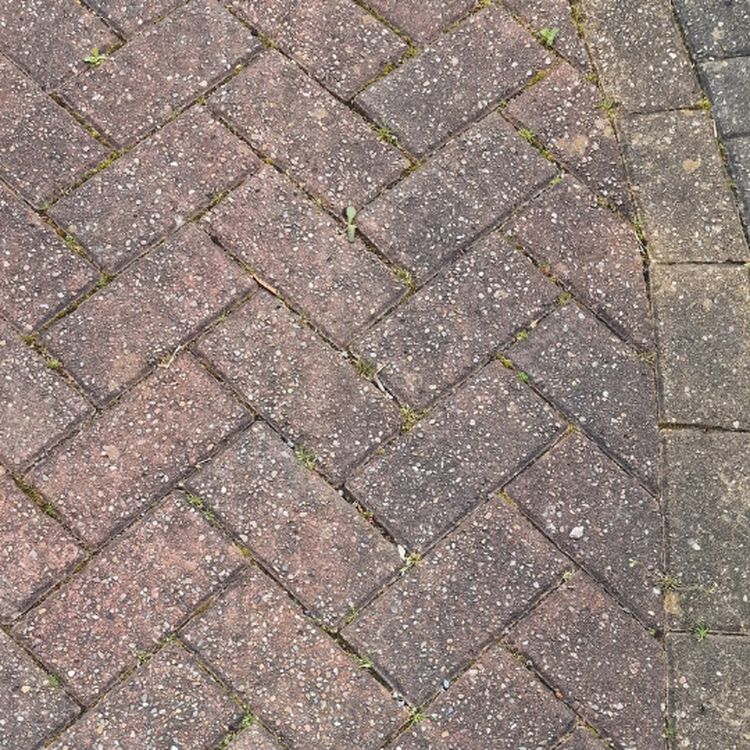
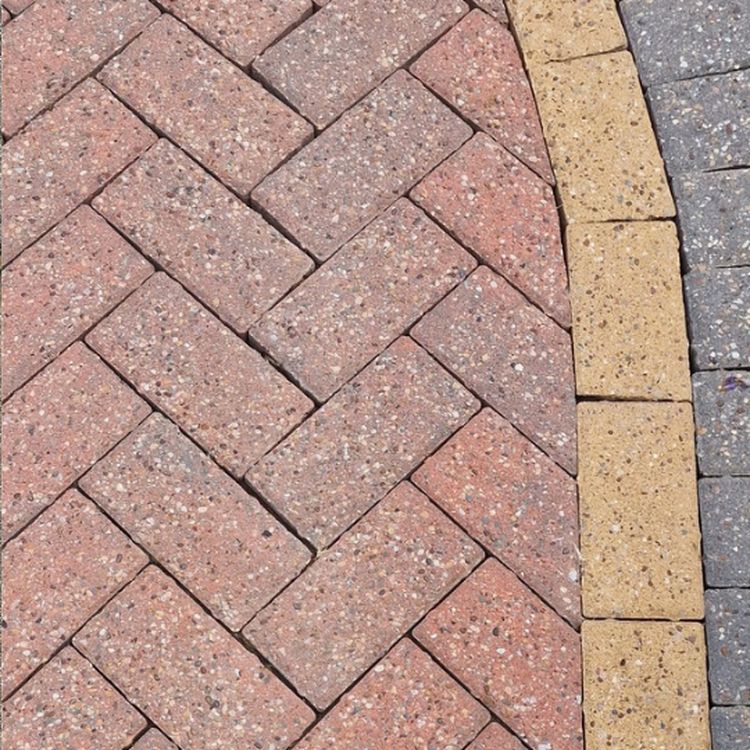
What happens if you don't re-sand
- Blocks can rock and shift, especially where cars turn
- Weed seeds land in the open joints and root quickly
- The driveway looks unfinished, with dark gaps between clean blocks
How we re-sand
We wait until the paving is fully dry, which may be a second short visit on a dry day, then brush kiln-dried sand into every joint until they're full. Kiln-dried sand is used because it's completely dry and fine, so it flows right down into the joint instead of clumping at the top.
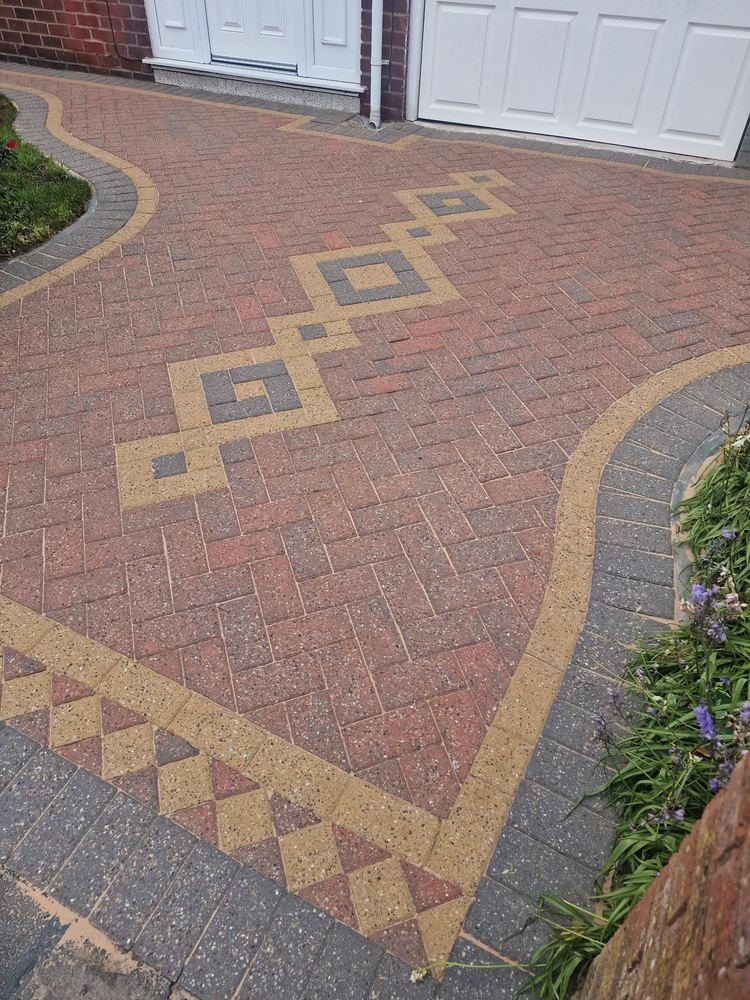
Re-sanding is included in our block paving cleaning price, from £180.
Get a block paving price
Photos of the area plus your full address and postcode are all we need. Most prices go out the same day.